
Develop the recipe, approve the product and packaging, then manufacture against an agreed standard for your market.

From our private-label portfolio.


Choose a product family, then define the taste, intended price point, consumer and packaging requirements.
| Product family | What to explore | Start your review |
|---|---|---|
| Soups, stocks & seasonings | Savoury bases, stock formats and recipe mixes. | Explore the family → |
| Baking, desserts & breakfast | Baking mixes, dessert mixes, baking aids and oat-based ranges. | Explore baking & desserts → |
| Noodles & pasta | Instant noodle and pasta ranges, with the component specification agreed for the programme. | Explore noodles & pasta → |
| Drink mixes, tea & matcha | Powdered drink mixes and tea or matcha formats. | Compare beverage families → |
| Coffee, creamers & sweeteners | Coffee mixes, creamers and tabletop sweetener formats. | Explore capabilities → |
Pack options include sachets, sticks, pouches, jars, trays, boxes and bulk packs, assessed against the product, fill weight and destination. Availability and manufacturing fit are confirmed for your specification.
Describe the target taste, consumer, price point, ingredients and intended market.
Use an authorised reference and define the sensory and technical criteria you want to assess.
Share the agreed product requirements, packaging and forecast; detailed formulation follows the confidentiality arrangements.
| Approval point | What to resolve | Why it matters |
|---|---|---|
| Product standard | Recipe version, sensory target, technical data sheet, allergens, shelf life and storage. | Gives development and manufacturing a defined benchmark. |
| Pack & artwork | Fill weight, materials, languages, legal text, barcodes, case configuration and final print proof. | Aligns the product presented to your customer with the approved specification. |
| Quantities & investment | Forecast by SKU and design, packaging minimums, any advance and the quotation basis. | Makes the commercial discussion specific to your product mix. |
| First-batch review | The agreed validation method, review window and responsibilities. | Keeps the first-batch review distinct from development-sample approval. |
Follow the journey from the first brief through product approval, packaging, first-batch validation and dispatch.
Watch our process
Product approval, packaging, first-batch validation and dispatch, explained step by step.
About five minutes. Includes on-screen captions.
The process in detail, from your first brief to dispatch. Use full screen to read the slides more easily.
Set target price and quality, destination market, packaging preferences, expected volumes and the launch target. If benchmarking an existing product, explain the reference and the volumes you expect to place.
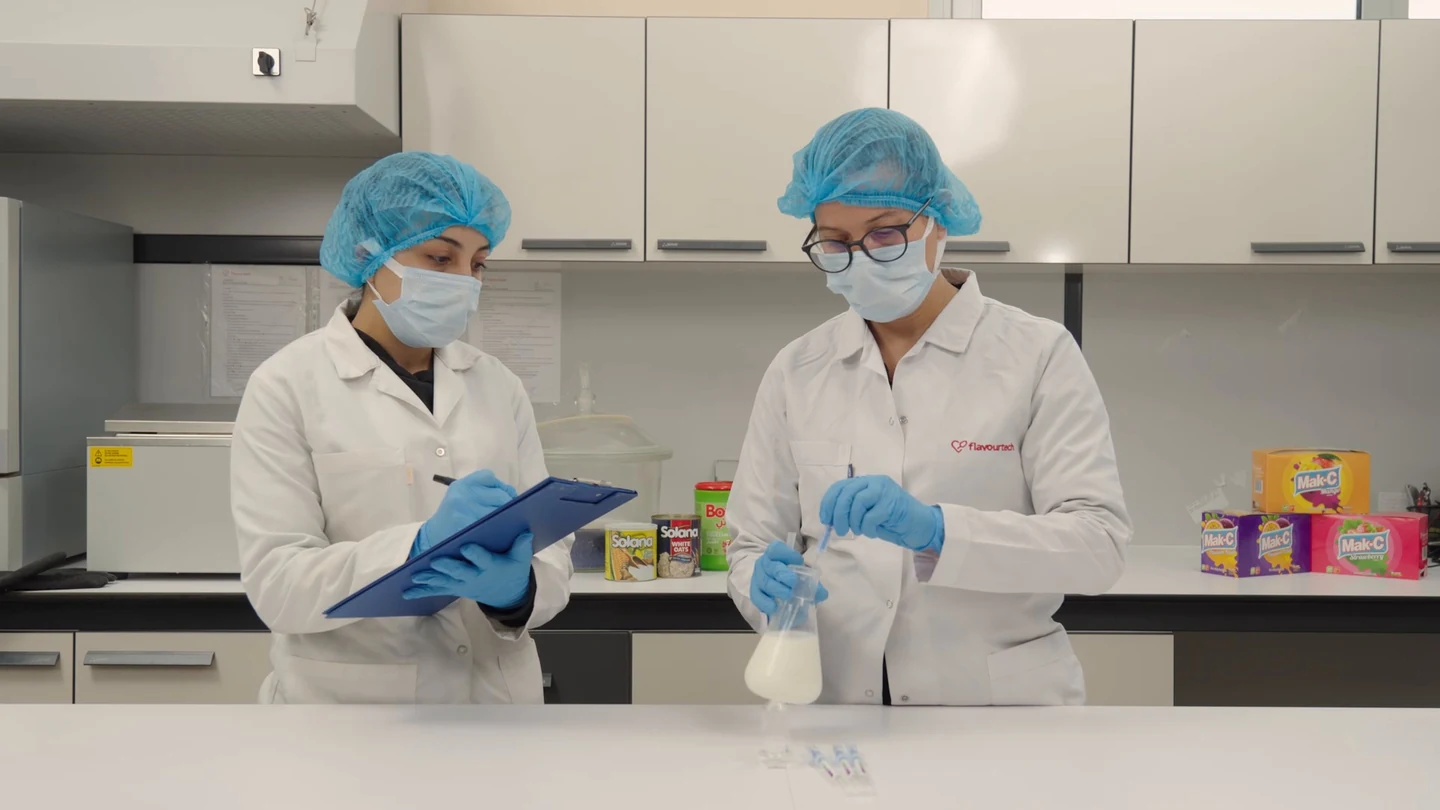
Evaluate development samples using the evaluation form. Identify the sample version and give specific feedback. Validate the final recipe, technical data sheets, shelf life, storage and importing-country requirements as part of the product specification.
Forecast quantities for each product, design and shipment. Several flexible-pack designs may share a printing-cylinder layout. Your mix and quantities can change the minimum order; review the options before quantities are finalised.
Agree whether your designer, an external agency or FlavourTech prepares the files, coordinates feedback and gives final approval. Artwork may progress alongside recipe development. Check the final proof and give written approval before printing.
Where a packaging advance is required, confirm its amount, deadline and credit against invoices. Packaging minimums may cover several shipments. Pay within the debit note validity period to secure the quoted packaging price. Printing visits require qualifying volumes, advance supplier agreement and the supplier’s confidentiality arrangements.
Agree the review method in advance: an arranged visit during filling or samples sent for review. This validation covers filling and its output. If samples are sent, provide comments within one week of receipt. Under this pre-agreed procedure, no feedback within that week means the first-batch samples are considered validated by default. Discuss any difficulty meeting the review period with your salesperson in advance.
Production follows the agreed specifications, approvals and release arrangements, with quality checks and packing for shipment. If requirements change, review the effect on price and timing together.
Confirm destination requirements, shipping documents and delivery arrangements with the logistics team before loading. Shelf-life requirements follow validated technical data sheets, agreed order conditions and applicable importing-country requirements. Production, dispatch and arrival are separate milestones; allow time for transport and clearance.
As explained in the video, the review procedure and project arrangements are agreed beforehand. Your salesperson coordinates the next steps with the relevant teams.
Request the documents relevant to your selected product, site and destination. Certificate scope and required tests are reviewed for the project.
The product, fill, pack, design and flavour mix, and forecast affect the proposal. Flexible-pack designs may share printing cylinders, and packaging minimums may cover more than one shipment. Share quantities by SKU, design and shipment.
Identify the sample version and provide specific feedback using the evaluation form. Validate the final recipe and technical data sheets, including shelf life, storage and importing-country requirements. First-batch filling validation is a separate agreed stage.
Agree the method beforehand: an arranged visit during filling or samples sent for review. As the unchanged video explains, comments on sent samples are due within one week of receipt; under that pre-agreed procedure, no feedback within the week means validation by default. Discuss any difficulty meeting the review period with your salesperson in advance.
Agree the designer, the feedback coordinator and the person giving final written approval. Check the product information and final proof before printing. Later changes can affect cost and timing.
Where an advance is required, agree its amount, deadline and credit against invoices. Pay within the debit note validity period to secure the quoted packaging price. Printing visits depend on qualifying volumes, advance supplier agreement and confidentiality arrangements.
Detailed development begins under an NDA. Ownership, permitted use and development rights are agreed in the project terms.
Timing is confirmed after product approvals, packaging requirements, availability and the production plan are reviewed. Production, dispatch and arrival are separate milestones, with time allowed for transport and clearance.
These details help us direct your enquiry to the right discussion.
Category, flavour, benchmark or intended application.
Destination, consumer, format and fill weight.
Indicative volumes and your intended launch target.
Start with a non-confidential outline. Detailed specifications and confidential files can follow through the channel agreed with our team.
Start with your contact details and a non-confidential product outline.